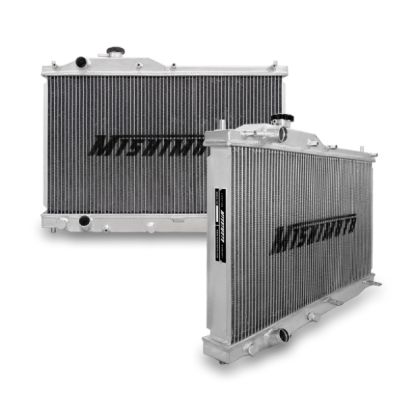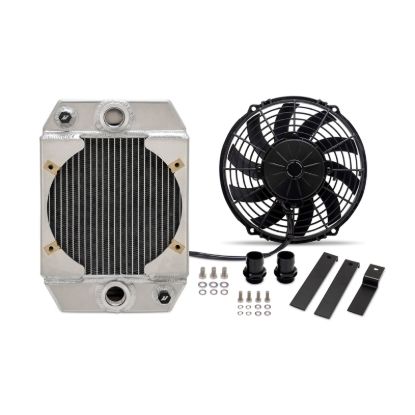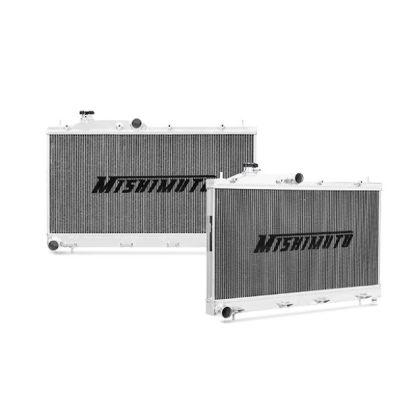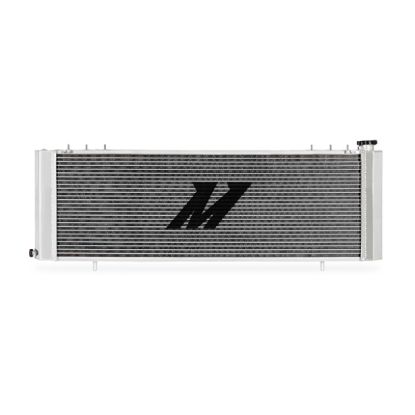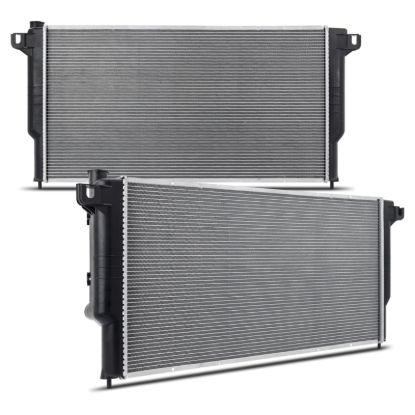

Mishimoto MMRAD-RHD-R33
misMMRAD-RHD-R33
Mishimoto R33/R34 Nissan Skyline (NON R34 GTR) Manual Aluminum Radiator
543,82 € excl. VAT
Does your temperature gauge creep up on a track day, in summer traffic or after adding more boost? Here we gather radiators, radiator cores, brackets and accessories for you who want to give your engine more cooling capacity, or who simply need to replace a leaking original radiator with a new one in aluminium or plastic.
The radiator transfers the heat that the coolant picks up in the engine to the air flowing through the core. More power, higher boost and longer periods at high revs generate more heat. If the cooling system can't keep up, the temperature rises and the risk of overheating increases. In this category you'll find complete radiators, e.g. aFe BladeRunner Street Series in aluminium with tubes and fins, Koyorad Racing Radiator and an OEM radiator in plastic from CSF. You'll also find separate cores and radiator brackets for installation.
Size alone doesn't determine cooling capacity. Look at several factors together:
Some models have a built-in oil cooler, e.g. Skunk2 Ultra Series for BRZ/FR-S. Otherwise, a separate oil or fluid cooler may be relevant for your project.
While the radiator is out anyway, it makes sense to check hoses, clamps and the cap, and to make sure the thermostat and filler neck work properly. Use the coolant recommended by the engine manufacturer and avoid mixing types. Bleed the system thoroughly after installation, as air pockets can cause localised overheating. Clean the fins of insects and dirt regularly, and keep an eye out for leaks at joints and tanks.
A complete radiator comes assembled with core, tanks and connections. A radiator core is the heat exchanger itself and is typically used if you are building or repairing a radiator and have tanks that can be reused.
Yes, if the airflow can't keep up or the core creates too much air resistance. The engine may also take a long time to reach operating temperature in cold weather. The thermostat, fan and air ducts should therefore match the radiator.
The cause may be air in the system, a faulty thermostat, a weak water pump, a leaking cap or a lack of airflow through the core. First bleed the system thoroughly, then check the components one at a time.