Aeromotive Fuel Tank
aer18143
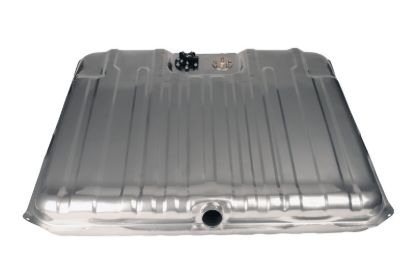
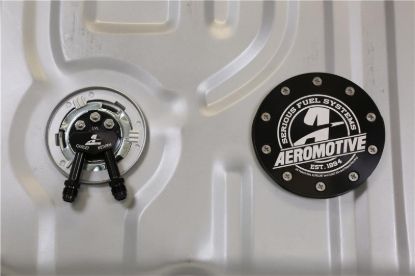
Aeromotive 70-74 Chevrolet Barracuda 200 Stealth Gen 2 Fuel Tank
1.116,84 € excl. VAT
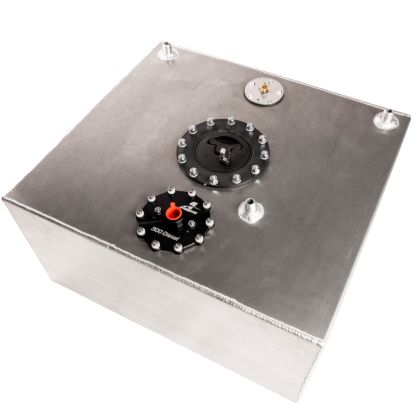
Does fuel slosh away from the pump pickup in hard corners, or do you need to relocate the tank to make room in your project? In this category we bring together tanks, fuel cells, surge tanks, fuel caps, filler parts, sending units and mounting kits for you who are rebuilding your fuel system for track, street or restoration.
A fuel tank is made to replace the original tank, e.g. the Aeromotive 69-70 Ford Mustang 340 Stealth Gen 2 Fuel Tank. Fuel cells are safety tanks that typically have a heavy-duty shell and often foam inserts that reduce sloshing. For example, the Radium Engineering R06A and R14A are available in 6 and 14 gallons respectively. A surge tank is a small buffer tank that can keep the pump supplied when the level in the main tank is low or the fuel is pushed to the side under hard cornering and braking. Brands in the category include Aeromotive, Radium Engineering, OMIX, Fuelab and Titan Fuel Tanks.
Capacity is only one of several factors:
A fuel cell must be securely mounted and protected, and a mounting kit can make it easier to achieve a solid installation. Fuel caps and filler parts, e.g. an OMIX filler hose for Jeep CJ 78-86 or a locking ring from Radium Engineering, must seal tightly to prevent leaks and fumes. Whether a tank may be used on the road or in a specific race depends on the product, the car and the regulations, so check the approval for the specific part number. Foam and rubber parts can age, so inspect them regularly for crumbling and leaks.
A fuel cell is a safety tank that typically has a stronger shell and often foam inserts to prevent sloshing. A regular tank is usually made for a specific car. The choice depends on use, space and regulations.
It can be relevant if the engine loses fuel pressure in long corners, under hard acceleration or with a low fuel level. The surge tank keeps a small amount of fuel ready for the pump and must match your system.
It depends on the product and the car. Check the approval for the specific part number and the requirements that apply at inspection. For motorsport, the tank must also meet the regulations you compete under.
Typically, the sending unit's resistance range does not match the gauge, or the sender's length does not match the tank's depth. Check both before installation, and calibrate the gauge if it allows it.