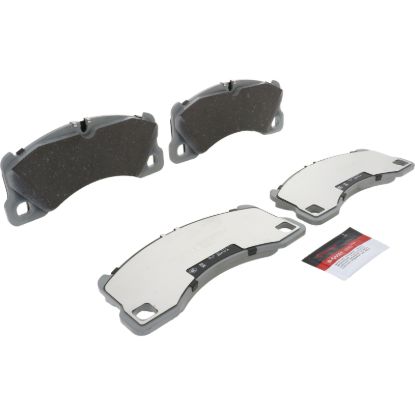

Brembo Disc Brake Pad Set
breP24166N
Brembo 10-22 Ford Expedition/11-19 Lincoln Navigator Front Premium NAO Ceramic OE Equivalent Pad
103,97 € excl. VAT
How should your brakes bite when you're driving in everyday traffic, and how should they hold up when you push the car hard on a track day? Here you choose brake pads by use, so the compound suits your car, your driving and your brake discs.
The brake pad converts pedal pressure into friction against the disc, and the compound determines how the brake bites, how hot it can work and how much it dusts and wears. We have split the range into street brake pads and track and race pads. You will find, for example, Brembo HP2 pads and Alcon AV1 pad sets as well as brands such as EBC, Hawk Performance, PowerStop, R1 Concepts and DFC.
Overheating can cause braking performance to fade, while a soft or long pedal is more often caused by boiling brake fluid – these are two different problems. If you change pad compound, it typically makes sense to look at the brake discs at the same time, and if you are missing a wear sensor, you will find brake pad wear indicators. New pads normally need to be bedded in according to the manufacturer's instructions before they deliver full performance.
It depends on the pad. Many track pads are made for high operating temperatures and can bite less when cold, and they can produce more noise and dust. For mixed use, you should look for a compound designed for both road and track.
It depends on the specific product and your car. Always check whether that exact part number has the relevant approval, such as R90, before fitting the pads to a car that will be driven on public roads or taken for inspection.
Bedding in lays an even layer of pad material on the disc so the pad can bite consistently. If you skip it, the brake can feel uneven or vibrate. Follow the manufacturer's instructions for the specific pad, as the procedure can vary.